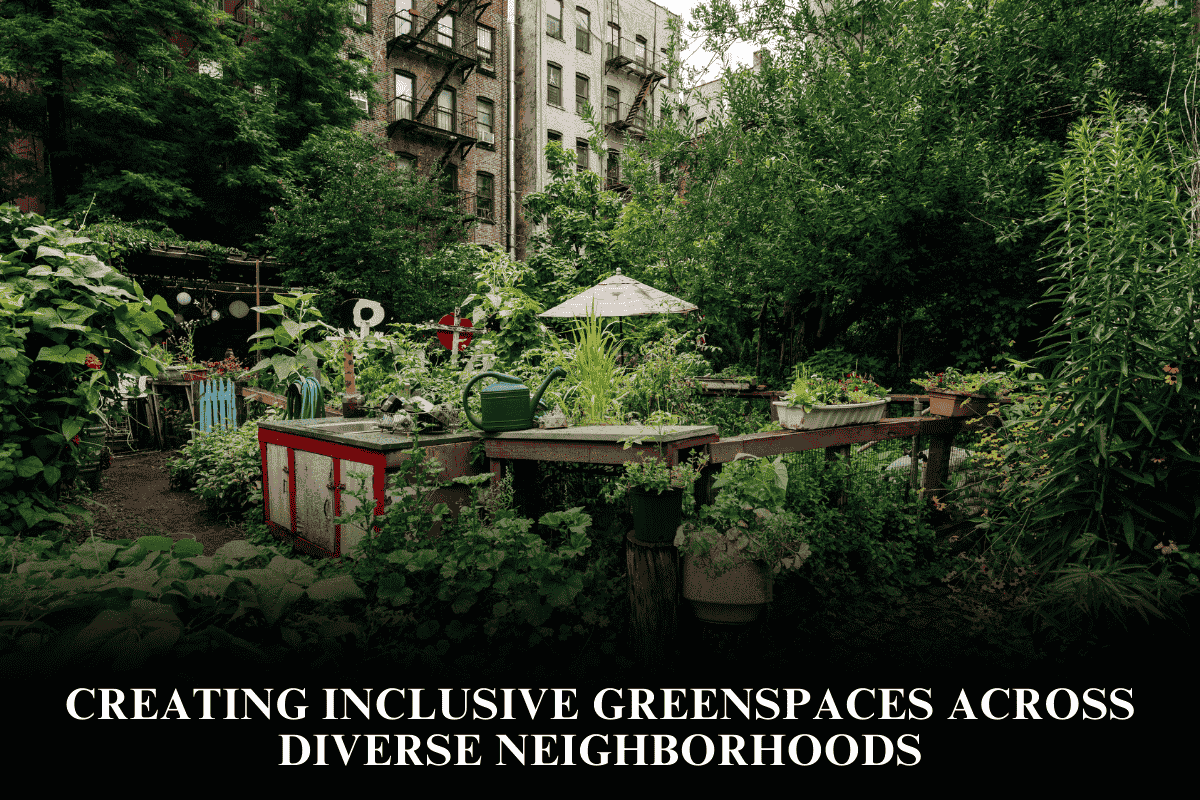
Creating inclusive greenspaces across diverse neighborhoods involves intentional design, community engagement, and equitable access to ensure that all residents feel welcome, safe, and able to benefit from these shared natural areas. Inclusive greenspaces foster social cohesion, promote health and well-being, and accommodate the varied needs of diverse populations.
Key Principles for Inclusive Greenspaces
- Recognize social inequalities and integrate diverse voices, especially marginalized groups, throughout planning and design processes.
- Develop multifunctional spaces that cater to different ages, cultures, abilities, and activities, including playgrounds, sports areas, natural zones, and quiet spaces.
- Ensure accessibility by providing paved paths, seating for older adults, braille signage, and transit connections to serve people with varying physical abilities.
- Incorporate Crime Prevention Through Environmental Design (CPTED) principles to enhance safety, such as good lighting, clear sightlines, and active usage zones.
- Use native plants and sustainable landscaping to reflect local ecology and cultural connections while supporting environmental resilience.
Community Engagement as a Cornerstone
- Engage residents through workshops, public consultations, and participatory design to capture preferences and foster ownership.
- Involve youth and other often underrepresented groups in decision-making, stewardship, and park management programs.
- Facilitate partnerships with local organizations, schools, and health professionals to maximize social and health benefits.
- Ongoing community involvement helps maintain, protect, and adapt greenspaces to evolving neighborhood needs.
FAQ
Q: Why is inclusivity important in greenspace design?
A: Inclusivity ensures spaces are welcoming, usable, and beneficial for everyone, reducing disparities and fostering community belonging.
Q: How can planners engage diverse communities effectively?
A: By using accessible outreach methods, ensuring language and cultural sensitivity, and actively including marginalized voices in planning.
Q: What features make greenspaces accessible?
A: Paved and well-maintained paths, varied seating, clear signage, transport links, and amenities for people with disabilities.
Q: How does inclusive design impact safety?
A: It promotes natural surveillance, reduces crime opportunities, and encourages regular use by diverse groups, making spaces safer.
Q: Can greenspaces improve community health?
A: Yes, by providing places for physical activity, mental restoration, social interaction, and environmental quality improvements.