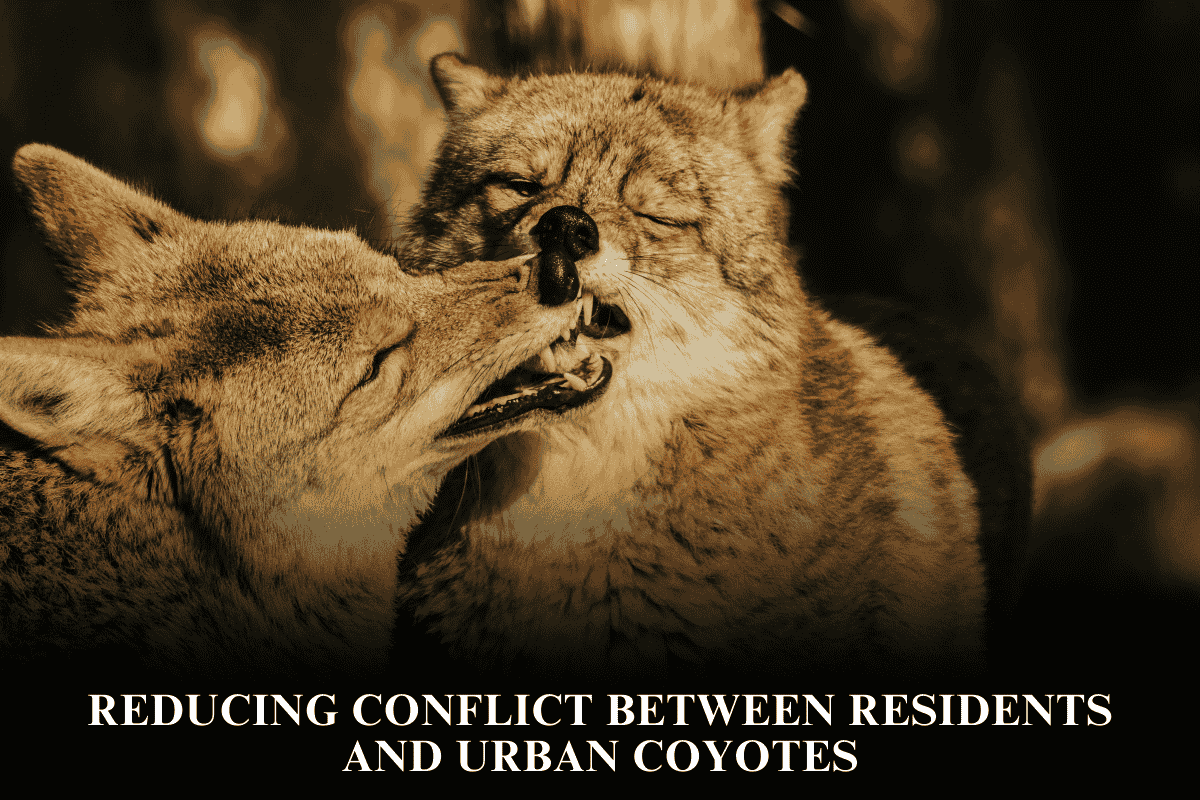
Reducing conflict between residents and urban coyotes depends less on removing coyotes and more on changing human behavior to support safe coexistence. Education, attractant control, hazing of bold animals, and coordinated municipal policies all significantly lower risk to people and pets. These strategies also preserve coyotes’ ecological benefits, such as rodent control, while prioritizing public safety.
Why Conflicts Happen
Coyotes thrive in cities by exploiting food, water, and shelter created by humans, which can gradually reduce their natural fear of people. When residents intentionally or unintentionally feed coyotes—through unsecured garbage, outdoor pet food, or feral cat feeding—animals learn to associate humans with easy meals, increasing daytime sightings and bolder behavior. Most incidents escalate along a predictable “conflict ladder,” from simple sightings to pets taken near homes and, rarely, direct aggression toward people.
Public attitudes and language (“nuisance,” “dangerous predator”) heavily shape policy, influencing whether communities choose lethal control or coexistence-based approaches.
Practical Steps for Residents
Residents play a frontline role in preventing problems before they start.
- Never feed coyotes; bring pet food indoors and secure garbage and compost with tight-fitting lids.
- Protect pets: keep cats indoors, supervise dogs on short leashes, especially at dawn and dusk, and avoid walking near dense brush where coyotes may rest.
- Remove attractants like fallen fruit, outdoor birdseed spills, and accessible water sources around yards.
- Coyote-proof yards with secure fencing and by closing access under decks, sheds, and porches.
If a coyote approaches, residents should “haze” it—stand tall, make loud noises, wave arms, and slowly move toward the animal until it retreats, reinforcing a healthy fear of people.
Community and Policy Solutions
Effective conflict reduction requires coordinated, citywide planning rather than isolated individual responses. Model coexistence plans emphasize three pillars: public education campaigns, enforcement of anti-feeding and leash laws, and clear protocols that categorize and respond to coyote behavior from simple sightings to aggressive incidents. Community-level programs provide response kits, neighborhood trainings in hazing, and consistent messaging that normal daytime sightings are not emergencies, while bold or aggressive coyotes are reported and assessed.
Successful cities integrate non-lethal tools—education, habitat management, and targeted hazing—reserving lethal removal only for animals that show persistent aggression despite interventions.
FAQ
Are coyotes in neighborhoods always a danger?
No. Simply seeing a coyote, even during the day, is usually normal; risk rises when coyotes are fed or lose fear of humans.
What should I do if a coyote approaches me or my dog?
Stay calm, keep pets close or pick up small dogs, make yourself big, shout, clap, use noise-makers, and back away slowly while maintaining eye contact.
Does feeding wildlife really increase attacks?
Yes. Feeding (direct or via unsecured trash and pet food) is a major driver of habituation and serious conflicts in case reviews.
When is lethal control appropriate?
Most coexistence plans recommend it only for coyotes that show repeated fearless or aggressive behavior after education and hazing have been tried.
How can cities help residents live safely with coyotes?
By running education campaigns, enforcing anti-feeding and leash laws, improving trash management, and offering clear guidance on reporting and hazing.
Do coyotes provide any benefits in cities?
Yes. They help control rodents and other small mammals, contributing to urban ecosystem balance when conflicts are well managed.