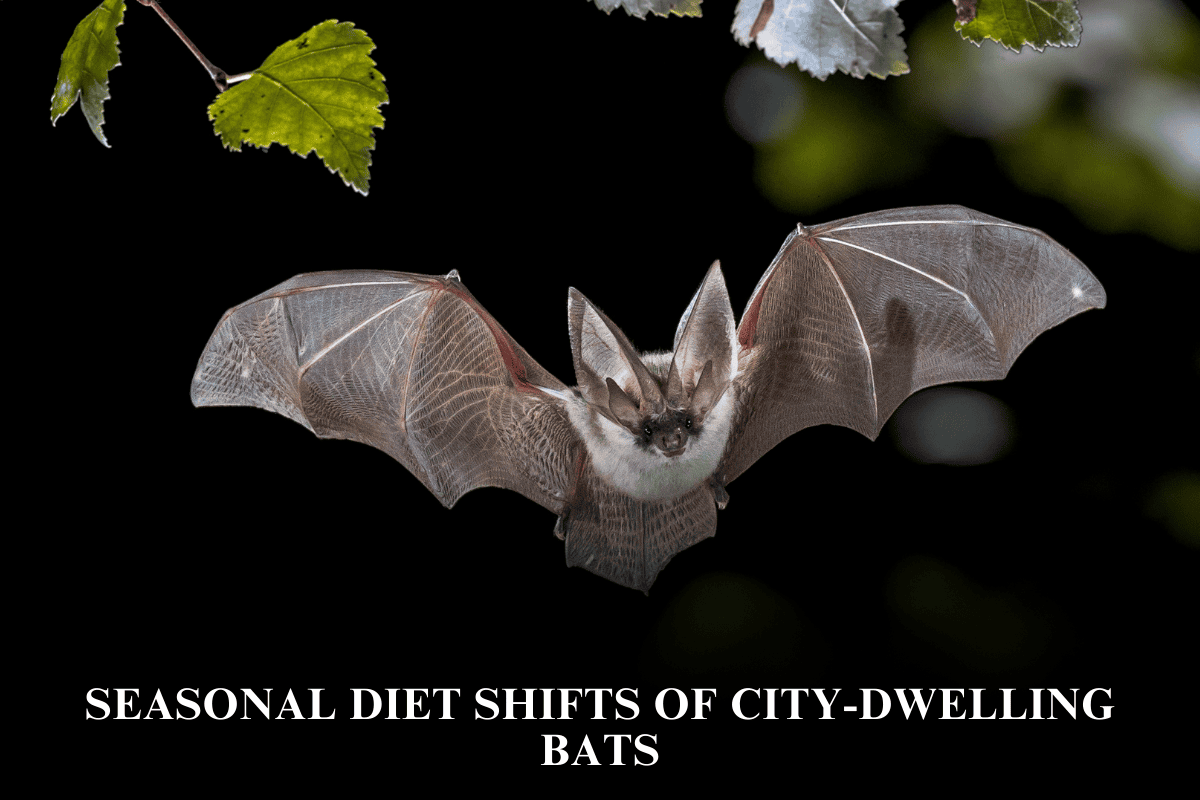
Seasonal diet shifts in city-dwelling bats are driven by their adaptation to urban environments where they diversify their diets by switching food sources frequently, especially fruit species, to improve diet quality. Urban bats tend to have more diverse diets than rural bats, often switching foraging sites and fruit types, which allows them to access a wider variety of nutrients that might not be available from a single source.
In temperate regions, insectivorous urban bats also adjust their diet seasonally to compensate for the different availability of prey types, exhibiting flexibility and generalist feeding behavior in winter.
Urban Bat Diet Adaptation and Diversification
Bats in urban environments exhibit exploratory foraging behavior, frequently changing sites and switching fruit species within short periods, which leads to a more diverse diet than their rural counterparts. Urban areas offer a higher variety of fruit species—including introduced species not commonly found in rural areas—allowing bats to improve nutrient intake, especially protein, which is often limited in fruit diets.
This diversification is adaptive and not primarily driven by competition but by the availability and distribution of food sources in cities. Even bats roosting in rural areas often commute to urban sites to forage, highlighting the attractiveness of urban environments for dietary resources.
Seasonal Dietary Changes in Insectivorous Bats
Seasonal changes impact insect availability, causing insectivorous bats in urban and forested areas to shift their diets. In winter, prey limitations lead some bat species to adopt more generalist feeding strategies, consuming a broader range of insect taxa, such as beetles (Coleoptera), flies (Diptera), and moths (Lepidoptera).
Dietary plasticity helps bats adapt to fluctuating prey populations and weather conditions. For example, some species consume more small soft-bodied insects in winter due to their relative abundance, while others shift between hard-bodied and soft-bodied prey based on availability.
Benefits and Ecological Roles
Urban bats’ dietary flexibility allows them to persist and even thrive in human-modified landscapes by exploiting diverse food sources. This plasticity may have benefits, including reduced predation risk and navigation ease due to urban landmarks.
Seasonal diet shifts also enable bats to continue playing a crucial ecological role as consumers of agricultural pests and disease vectors, helping to control insect populations even in winter and urban settings. This adaptability portrays bats as important components of urban biodiversity and ecosystem services.
FAQs
How do seasonal diet shifts benefit bats ecologically?
They help bats maintain nutritional balance, cope with environmental changes, and support their role in pest control across different seasons.
What causes bats to change their diet between seasons?
Seasonal fluctuations in food availability, such as fruit ripening cycles or insect population changes, cause bats to adapt their diet to optimize nutrient intake.
How do urban environments influence bat diets compared to rural areas?
Urban areas provide a wider variety of fruit species and insect prey, leading to more dietary diversity and frequent changes in food sources for urban bats.
Do all bat species exhibit seasonal diet shifts?
While most bats show some seasonal dietary adjustments, the degree varies by species, with insectivorous bats showing more pronounced shifts due to changes in prey availability.
Why do urban bats switch foraging sites more often?
Switching sites allows urban bats to diversify their diet by accessing various fruit or insect species distributed across the city.