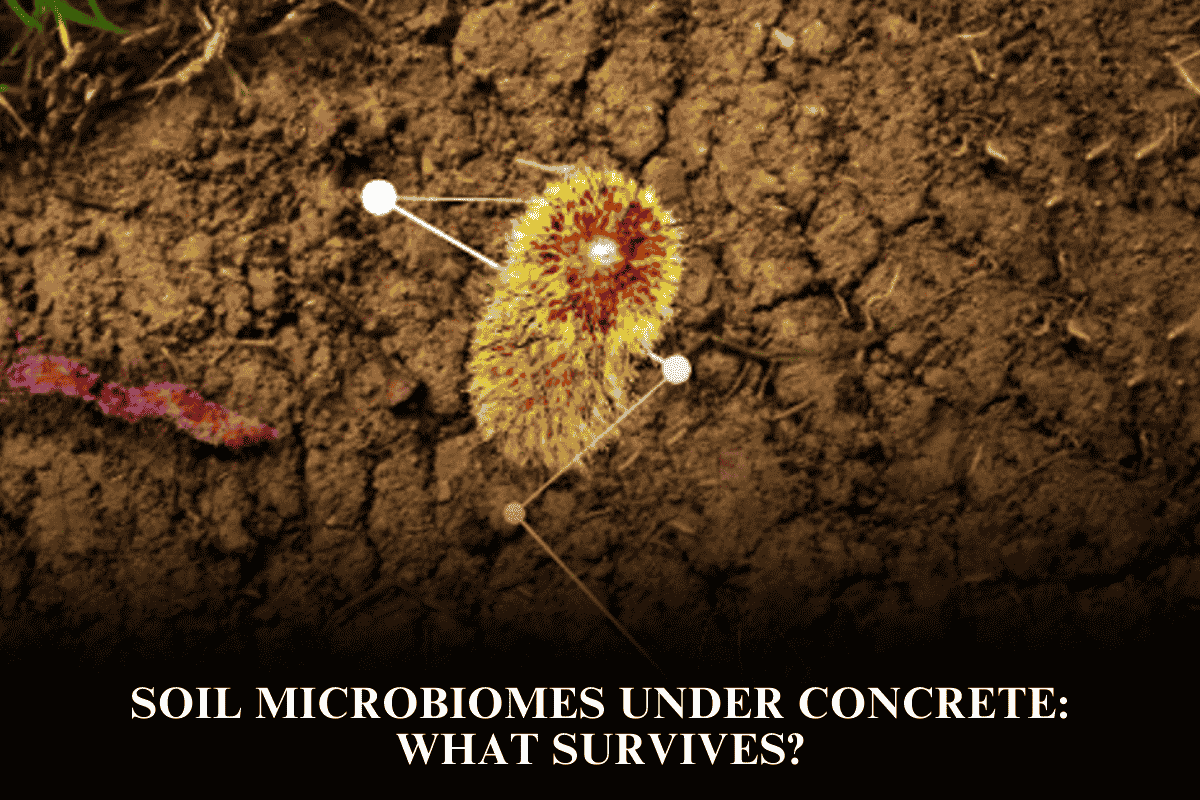
Soil microbiomes under concrete represent a unique and challenging environment where microbial communities face extreme conditions such as limited oxygen, moisture, and nutrient availability.
Despite these constraints, certain resilient microbes can survive and even adapt beneath concrete surfaces, although overall microbial diversity and activity tend to be reduced compared to open soil. Understanding what survives under concrete helps reveal the ecological impacts of urbanization and informs sustainable design and restoration practices.
Microbial Survival Under Concrete
Concrete coverage creates an impermeable barrier, significantly altering the soil environment by restricting gas exchange, moisture, and organic inputs, which are vital for microbial ecosystems. Studies show that soil beneath concrete typically harbors lower bacterial diversity but contains hardy microorganisms capable of enduring alkaline conditions and low resource availability.
Common surviving groups include Proteobacteria, Firmicutes, and Actinobacteria, which are versatile and can tolerate stressors such as high pH and limited oxygen.
Factors Influencing Microbial Communities
The composition of microbiomes under concrete largely reflects the source materials used in concrete and soil characteristics before coverage. For example, gravel and cement powder contribute microbial “seeds” to the concrete’s microbial community.
Environmental factors like pH, moisture retention, and heavy metal presence (e.g., zinc) also shape microbial diversity and function beneath impervious surfaces. Impervious cover generally reduces microbial biomass and enzyme activity, impairing soil’s natural nutrient cycling and ecosystem services.
Ecological and Structural Impacts
The altered microbial communities under concrete impact soil health and its ability to support plant life and degrade pollutants. The reduction in microbial functional diversity can lead to decreased soil fertility and resilience. However, some microbes found under concrete play roles in concrete degradation or repair; for instance, bacteria capable of calcium carbonate precipitation have been explored for creating self-healing concrete materials.
This interaction highlights a complex microbiome-concrete relationship that influences urban infrastructure longevity.
Restoration and Urban Planning Considerations
Recognizing which microbes survive and thrive under concrete can guide urban design that mitigates negative ecological effects. Use of permeable pavements or partial soil exposure supports healthier soil microbiomes beneath urban structures.
Incorporating microbial colonies or bio-additives into concrete compositions holds promise for enhancing durability and environmental sustainability. These biotechnological advances aim to harmonize construction practices with microbial ecology to maintain urban soil functionality.
FAQ
Can any microbes survive under concrete?
Yes, though microbial diversity is reduced, certain resilient bacteria such as Proteobacteria and Actinobacteria survive due to their adaptability to harsh conditions.
How does concrete affect soil microbial diversity?
Concrete acts as a barrier, reducing moisture, oxygen, and nutrient flow, which lowers microbial biomass and functional diversity in the soil beneath.
What environmental factors influence microbes under concrete?
Soil pH, moisture retention, heavy metal content, and precursor materials of concrete substantially affect the microbial communities.
Are microbes beneficial or harmful under concrete?
Some microbes contribute to concrete degradation, while others have potential for concrete self-healing by producing calcium carbonate, enhancing structural longevity.
How can urban planners promote healthy soil microbiomes?
Using permeable pavements, incorporating bio-additives in concrete, and minimizing impervious surface coverage help maintain functional soil microbial ecosystems.