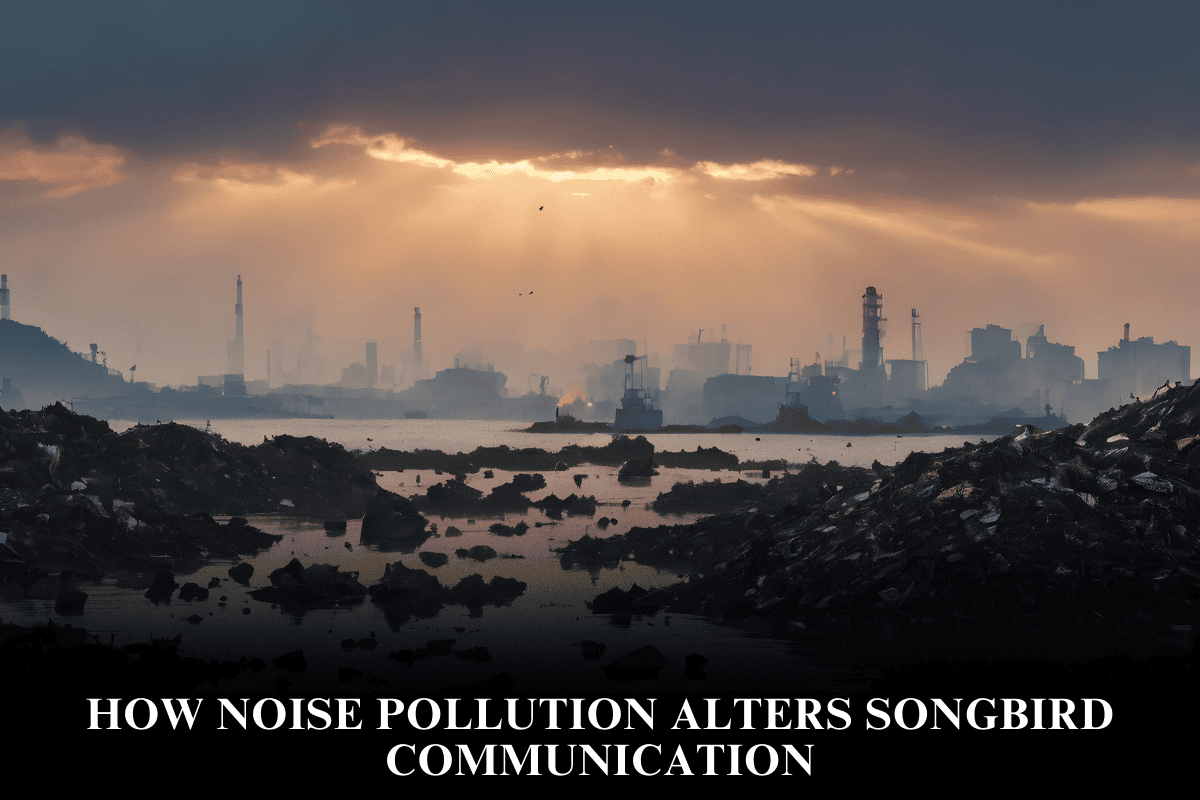
Anthropogenic noise from traffic, industry, and urban activity masks songbird vocalizations, forcing adaptations in frequency, amplitude, and timing that disrupt mating, territory defense, and community structure. Birds raise song pitch to evade low-frequency masking, increase volume via the Lombard effect, and shorten songs, but these changes carry energetic costs and may reduce attractiveness. Urban noise filters species, favoring high-frequency singers while excluding larger, low-frequency ones, reshaping ecosystems.
Acoustic Masking and Frequency Shifts
Low-frequency traffic noise (below 2 kHz) overlaps songbird signals, reducing detection range; city birds shift minimum/peak frequencies upward by 200-900 Hz, enhancing transmission by 13-43%. Blackbirds and catbirds in noisy areas produce higher-pitched dawn choruses, with effects peaking early breeding season. However, biophysical limits cap loud low-frequency output, amplifying frequency reliance.
Amplitude and Song Structure Changes
The Lombard effect boosts amplitude 2.5+ dB in noise, but higher frequencies inherently carry more volume, compounding gains. Songs shorten, simplify, or lose complexity/diversity to cut masking duration, altering bandwidth and entropy. Urban white-crowned sparrows maintain performance but adjust overall, trading traits for audibility.
Behavioral and Community Impacts
Noise hampers mate attraction and territory patrols, increasing aggression or delaying nesting—low-frequency species nest later. Community shifts exclude noise-sensitive species, boosting high-pitch tolerant ones; wind turbines similarly disrupt. Synergies with light pollution intensify dawn/dusk alterations.
Long-Term Ecological Consequences
Chronic exposure selects urban-adapted songs, potentially diverging populations; fitness costs include exhaustion, reduced pairing success. Mitigation via quieter zones preserves communication.
FAQ
How does noise mask songbird songs?
Low-frequency urban noise overlaps signals, cutting detection/transmission distance.
What is the Lombard effect in birds?
Automatic amplitude increase in response to background noise for audibility.
Why do urban birds sing higher-pitched?
Shifts evade masking, as high frequencies transmit better over low-frequency noise.
Does noise change bird communities?
Yes, filters out low-frequency/large species, favoring high-pitch tolerant ones.
What are fitness costs of adaptations?
Energetic drain, simpler songs less attractive, delayed breeding.