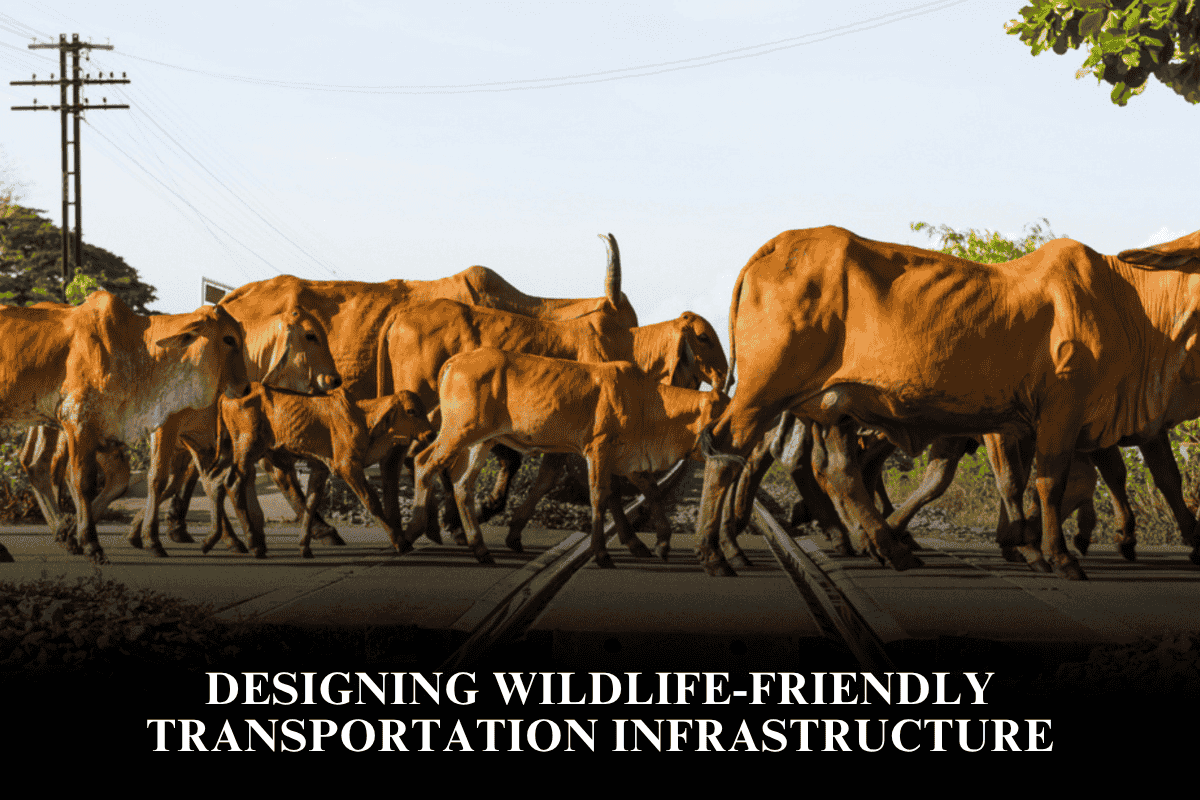
Modern transportation infrastructure development faces the critical challenge of balancing economic growth with biodiversity conservation. Designing wildlife-friendly transportation infrastructure integrates specific measures to reduce wildlife mortality, habitat fragmentation, and human-wildlife conflicts while ensuring safe and efficient mobility for people.
Key Design Strategies
- Wildlife Crossing Structures: Overpasses, underpasses, tunnels, and culverts designed specifically for wildlife allow safe passage across roads and railways, maintaining habitat connectivity and reducing collisions.
- Fencing and Funnel Systems: Barriers direct animals toward safe crossing points, preventing accidental entry onto roadways and guiding wildlife away from dangerous zones.
- Road Alignment and Vegetation Management: Strategic placement of roads to avoid ecologically sensitive areas and managing roadside vegetation to reduce attractiveness or hazards for wildlife.
- Speed Regulation and Motorist Awareness: Implementing traffic calming, signage, and speed restrictions in key areas to reduce wildlife-vehicle collisions.
- Multi-Species Permeability Plans: Design plans considering different species’ needs to maintain landscape-wide ecological connectivity, incorporating multiple crossing types and complementary habitat restoration.
Benefits and Ecological Impact
Integrating wildlife-friendly designs helps preserve biodiversity, supports ecosystem services, minimizes animal mortality, and fosters coexistence between infrastructure and natural habitats. Early integration into planning eases environmental clearances, optimizes project budgets, and enhances long-term sustainability.
Challenges and Future Directions
Challenges include cost constraints, diverse species requirements, and coordination across sectors. Future advances focus on using monitoring technologies, community engagement, and policy frameworks that mandate wildlife-friendly infrastructure as standard practice.
FAQs
Q1: What are wildlife crossing structures?
A1: Structures like overpasses, underpasses, and culverts that enable safe animal movement across transportation corridors, maintaining habitat connectivity.
Q2: How does fencing support wildlife crossings?
A2: Fencing funnels and guides animals toward designated safe crossing points, reducing road mortality and vehicle collisions.
Q3: Why is road alignment important for wildlife?
A3: Aligning roads away from key habitats and migration routes helps minimize ecological disruption and preserves natural landscapes.
Q4: How can traffic measures reduce wildlife collisions?
A4: Speed limits, signage, and traffic calming in high-risk areas alert drivers and reduce accidents involving animals.
Q5: What is a multi-species approach to infrastructure design?
A5: Considering the needs of various species in connectivity plans by incorporating diverse crossing types and habitat restoration to maintain ecosystem health