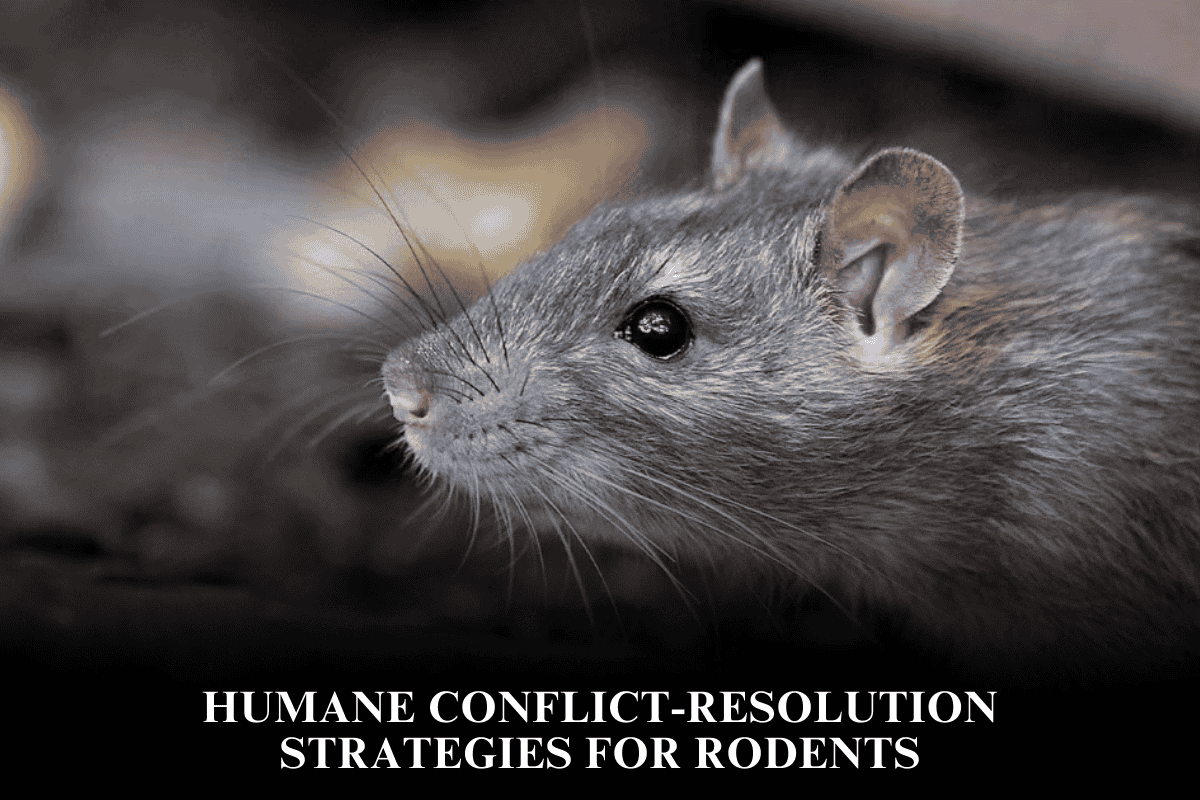
Managing rodent conflicts humanely involves non-lethal methods that reduce harm to animals while protecting property and human health. These strategies focus on deterrence, exclusion, habitat modification, and ethical capture or eviction.
Key Humane Strategies
- Source Elimination and Sanitation:
Identify and remove food, water, and shelter sources that attract rodents. Secure garbage, clean crumbs, store food in sealed containers, and eliminate clutter that offers hiding spots. - Exclusion and Proofing:
Seal entry points using metal mesh, caulking, and rodent-resistant materials to prevent entry into buildings. Maintain landscaping by trimming vegetation and removing debris to reduce rodent habitat near structures. - Humane Traps and Removal:
Use live traps that capture rodents without injury, followed by relocation away from human dwellings. Check traps frequently to avoid distress, and relocate responsibly to suitable environments. - Natural Deterrents:
Plant natural repellents such as mint, eucalyptus, and wormwood around properties. Peppermint or spearmint oils applied on cotton balls can be placed near suspected entryways to repel rodents due to strong scent. - Encourage Natural Predators:
Support wildlife like owls and snakes that naturally control rodent populations. Avoid killing predators to maintain balanced ecosystems.
Ethical Considerations
- Avoid glue traps or poisons that cause prolonged suffering; they are inhumane and environmentally harmful.
- Be mindful of rodent social structure and reproductive status; avoid separating nursing mothers from young without safe alternatives.
- Educate property owners on coexistence strategies and long-term prevention.
FAQ: Humane Rodent Conflict Resolution
Q: Are live traps effective for rodent control?
A: Yes, if checked regularly and combined with exclusion and sanitation measures.
Q: Can natural repellents completely eliminate rodents?
A: They may reduce activity but work best combined with other control methods.
Q: How can property be rodent-proofed?
A: Seal holes, repair vents, keep vegetation trimmed, and maintain cleanliness to deny access and resources.