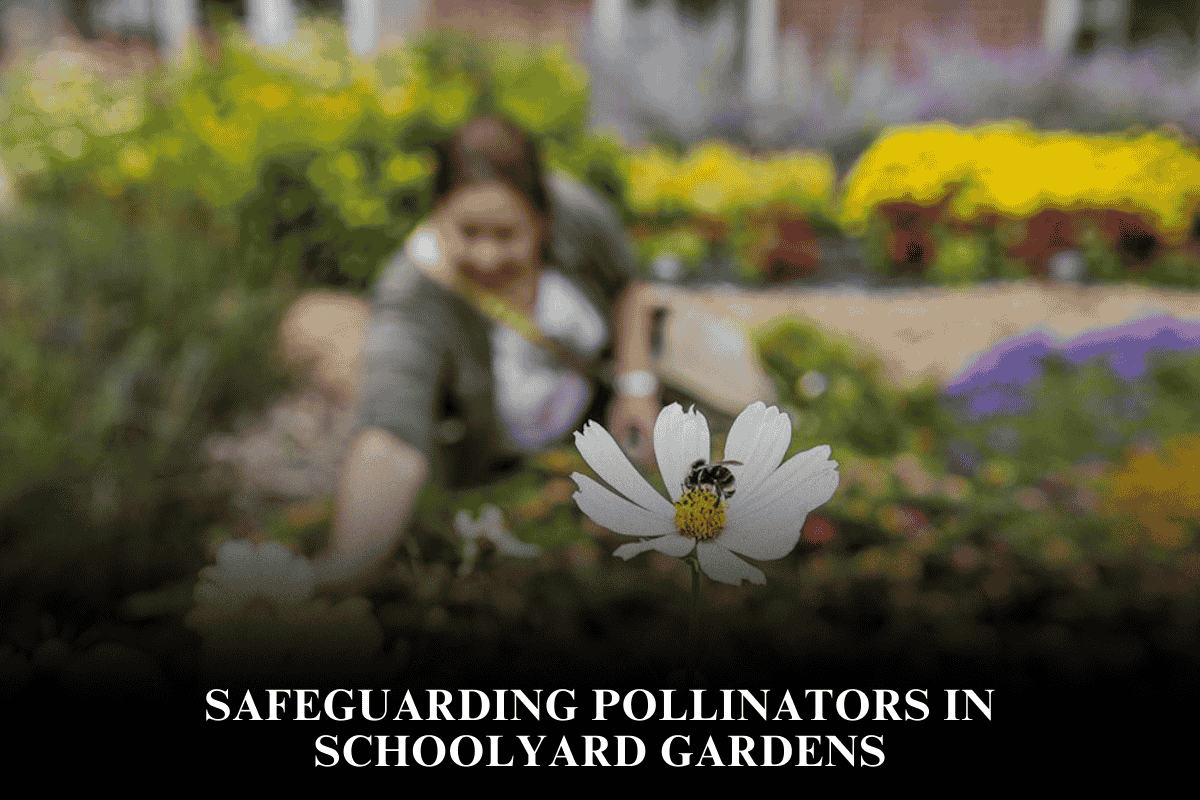
Schoolyard gardens provide an excellent opportunity to support and protect pollinators such as bees, butterflies, and other beneficial insects vital to ecosystems and food production. Creating pollinator-friendly environments in schools not only benefits biodiversity but also offers educational experiences that foster environmental stewardship among students.
How to Safeguard Pollinators in Schoolyard Gardens
- Plant Native and Pollinator-Friendly Species:
Use native wildflowers, trees, and shrubs that provide nectar and pollen throughout the growing season. Native plants better support local pollinator species than many ornamentalsThe best sources of food for pollinators are native plants (trees, shrubs, wildflowers). - Reduce or Eliminate Pesticide Use:
Avoid insecticides, herbicides, and fungicides that harm pollinators. If pesticide use is absolutely necessary, apply during times when pollinators are inactive and use the least toxic optionsEliminate use of pesticides, including insecticides, herbicides, and fungicides… Choose the least toxic and least persistent option. - Remove Invasive Plants:
Invasive species compete with native flora, reducing pollinator habitat quality. Removing invasives supports native plant communities and pollinator health. - Provide Shelter and Nesting Sites:
Leave bare patches of soil for ground-nesting bees, install bee blocks or insect hotels, and preserve leaf litter or dead flower heads for overwintering pollinatorsAbout 30% of the world’s bees nest in holes inside of trees, logs, or plant stems. - Ensure Water Sources:
Provide clean, shallow water for pollinators to drink, ensuring it is changed regularly to prevent mosquitoes. - Create Educational Opportunities:
Integrate pollinator garden activities into lessons, involve students in planning and maintenance, and use signage to explain pollinators’ importance.
FAQ: Safeguarding Pollinators in Schoolyard Gardens
Q: Why are pollinators important in school gardens?
A: They support plant reproduction, biodiversity, and inspire students through hands-on learning experiences.
Q: How can we safely manage pests in pollinator gardens?
A: Use integrated pest management: hand-picking pests, natural predators, physical barriers, and minimal pesticide use timed to avoid pollinator activity.
Q: What plants are best for attracting pollinators?
A: Native wildflowers, flowering herbs such as lavender and mint, and blooming trees provide essential food and habitat.
Q: How can schools maintain pollinator gardens year-round?
A: Leave leaf litter and dead flower heads in winter for shelter, plant a succession of blooms, and keep soil healthy.