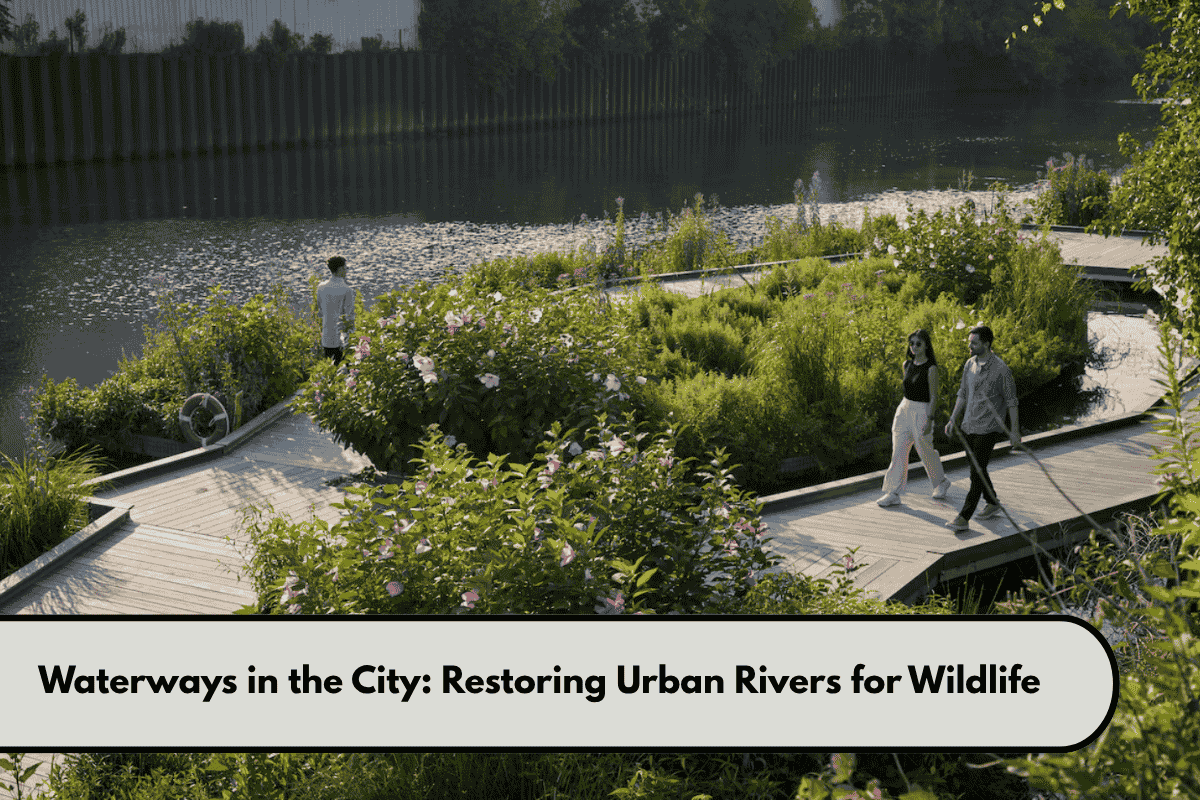
Restoring urban rivers is a vital strategy to enhance biodiversity, improve ecosystem health, and increase climate resilience in cities. Urban waterways, often degraded by pollution, channelization, and habitat loss, can be revitalized through ecological restoration efforts that reconnect rivers to their natural floodplains, stabilize banks with native vegetation, and create diverse aquatic habitats.
How Urban River Restoration Benefits Wildlife
- Habitat Improvement: Removing hard riverbanks and restoring riparian vegetation increases habitat complexity, providing refuge, breeding grounds, and food sources for fish, amphibians, birds, mammals, and invertebrates. Restored urban rivers serve as ecological corridors connecting fragmented green spaces and improving species movement.
- Water Quality and Flood Mitigation: Restoration reduces pollutant loads through natural filtration by vegetation, regulates water flow, and absorbs floodwaters, protecting both wildlife and human communities. Wetlands and vegetated buffers filter sediments and enhance aquatic life conditions.
- Climate Resilience: Urban river ecosystems help moderate local temperatures through shading and evapotranspiration, combat urban heat island effects, and act as carbon sinks. Restored rivers buffer climate extremes and support diverse communities adapting to urban heat.
- Community and Cultural Benefits: Restored rivers provide recreational, educational, and cultural spaces, fostering community engagement and environmental stewardship. Projects like Seoul’s Cheonggyecheon Stream illustrate successful integration of ecological restoration into urban revitalization with social and economic gains.
- Challenges: Urban rivers face threats from fragmentation, pollution, invasive species, and constrained space. Restoration requires multi-disciplinary cooperation and policy innovation to overcome legal and infrastructural barriers.
FAQs
Q1: Why restore urban rivers?
To improve wildlife habitat, water quality, flood protection, and community well-being.
Q2: How does restoration benefit biodiversity?
It creates complex habitat, connects fragmented ecosystems, and supports aquatic and riparian species.
Q3: What challenges exist in urban river restoration?
Pollution, habitat fragmentation, invasive species, and regulatory obstacles complicate efforts.
Q4: Can restored rivers help with climate change?
Yes, they moderate heat, manage floods, sequester carbon, and increase ecosystem resilience.
Q5: How can communities contribute?
Through river cleanups, citizen science, habitat planting, and advocacy.